When Every Town Had Its Thursday Night Heroes — The Bowling League Dynasty That Built America's Social Calendar
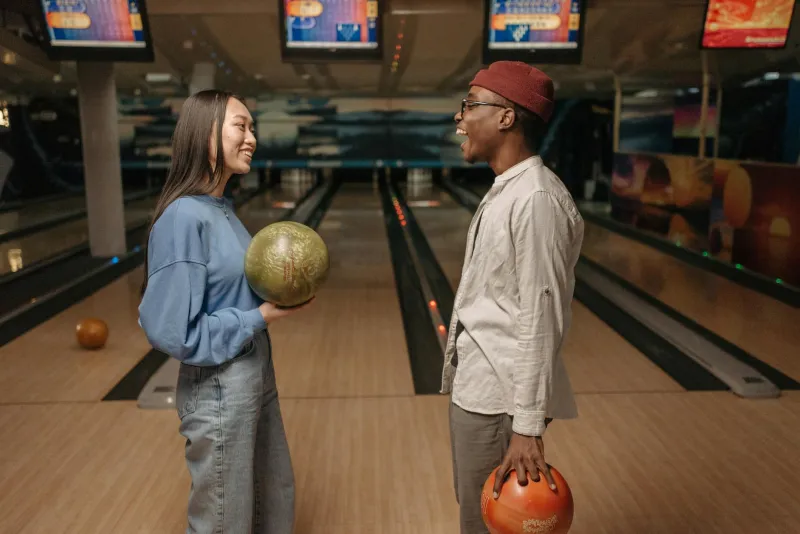
The Sacred Thursday Night Ritual
Walk into Valley Lanes on a Thursday evening in 1978, and you'd need to weave through a maze of cigarette smoke, competing conversations, and the constant thunder of pins falling. The parking lot was packed by 6:30 PM, filled with Buicks and pickup trucks whose owners had rushed home from work, grabbed their personalized bowling bags, and claimed their weekly spot at America's most democratic social club.
This wasn't just recreation — it was religion. The Teamsters league rolled at 7:00 sharp. The Ladies' Wednesday league had a six-month waiting list. The mixed couples league on Saturday nights was where half the town's marriages either strengthened or started showing cracks. For millions of Americans, the bowling alley was where community happened.
More Than Just Knocking Down Pins
The numbers from bowling's golden age tell an incredible story. In 1980, nearly 9 million Americans belonged to sanctioned bowling leagues. That's roughly one in every 25 people showing up religiously, week after week, to roll balls down wooden lanes alongside the same group of neighbors, coworkers, and friends.
But league bowling was never really about the sport itself. It was about the infrastructure of belonging that surrounded those 10 pins. Teams were sponsored by local businesses — Miller's Hardware, Tony's Pizza, First National Bank — creating a web of community investment that kept money and loyalty circulating within the neighborhood. The guy who sold you insurance on Tuesday became your teammate on Thursday, and that relationship meant something when it came time to renew your policy.
The ritual extended far beyond the two hours of actual bowling. There were season-ending banquets at the local VFW hall, summer picnics where entire extended bowling families gathered, and informal networks that helped members find jobs, babysitters, and reliable mechanics. When someone got divorced or lost a job, the bowling league was often the first place they'd hear about available apartments or work opportunities.
The Economics of Community
Here's what made the system work: it was affordable in a way that's almost unimaginable today. A typical league bowler in 1980 paid about $8 per week for three games, shoe rental, and the social infrastructure that came with membership. Adjusted for inflation, that's roughly $30 in today's money — but try finding that level of community engagement for $120 a month in 2024.
Local businesses didn't just sponsor teams as charity; they did it because bowling leagues were effective marketing. When Tony's Pizza sponsored a team, those four bowlers and their families became walking advertisements who generated real customer loyalty. The return on investment was measurable and immediate, creating a sustainable cycle that kept both the alleys and local businesses thriving.
The Great Unraveling
By 2018, sanctioned league membership had collapsed to fewer than 1.3 million Americans. That's an 85% decline from the peak, representing one of the most dramatic disappearances of organized social activity in modern American history.
What happened wasn't a single catastrophe but a slow-motion cultural shift. Families became busier and more scheduled. Youth sports exploded into year-round commitments that consumed entire weekends. Cable television offered entertainment that didn't require leaving the house or coordinating with other people's schedules.
The bowling alleys themselves accelerated their own decline by chasing quick profits over community building. Traditional league nights gave way to "cosmic bowling" with blacklights and loud music, arcade games, and restaurant service that prioritized individual customers over group experiences. The transformation was profitable in the short term but destroyed the social ecosystem that had sustained the industry for generations.
What We Lost in Translation
Modern Americans spend considerably more on recreation than their 1980 counterparts, but we've traded community for convenience. Where a bowling league created lasting relationships with the same group of people over years or decades, today's recreational activities are largely transactional. You pay for a spin class, a rock climbing session, or a round of golf, but you're not building the kind of social infrastructure that once helped people navigate life's challenges.
The economic model has shifted too. Instead of local businesses sponsoring teams as community investment, today's recreational spending flows largely to national chains and online platforms that extract wealth from communities rather than circulating it locally.
The Empty Lanes Tell the Story
Drive through any American town today, and you'll likely find the old bowling alley converted into a furniture store, church, or indoor trampoline park. The few that remain often struggle to fill their leagues, with aging members wondering what happened to the younger generation that never learned the rhythm of Thursday night pins.
What we lost wasn't just a game — it was a social technology that created belonging, economic connection, and multigenerational community in ways that our current recreational landscape rarely replicates. The empty lanes are a reminder that progress doesn't always mean improvement, and that some forms of entertainment did more than entertain — they held entire communities together.