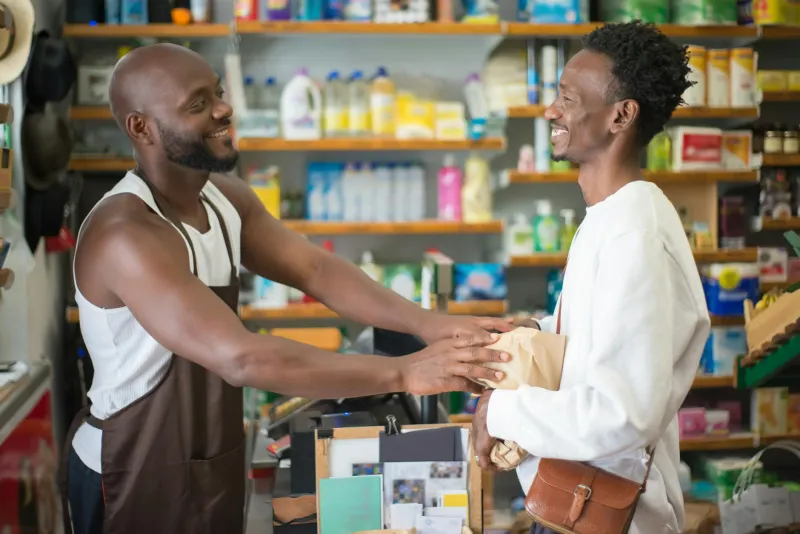
The Corner Store Covenant
Walk into Murphy's Hardware on Elm Street in 1963, and you'd find more than nuts and bolts. You'd discover a business model built on something revolutionary by today's standards: mutual trust. Need a lawn mower part but don't have the cash until payday? Murphy would set it aside with nothing more than your word. Planning a weekend project but unsure about the right materials? He'd walk you through the solution, knowing you'd come back when you needed supplies.
This wasn't naive small-town optimism. It was smart business based on community accountability. Murphy knew your family, your work history, and your reputation. More importantly, you knew his. That mutual knowledge created a business relationship that modern commerce, for all its efficiency, has never quite replicated.
When Your Reputation Was Your Credit Score
Before algorithms determined creditworthiness, your local reputation served as your financial profile. The grocer who extended credit during tough times, the mechanic who'd fix your car with payment plans based on handshakes, the pharmacist who'd fill prescriptions with a promise to settle up later — these relationships formed the backbone of neighborhood commerce.
This system worked because everyone lived within the same social ecosystem. Word traveled fast in tight-knit communities. A person who stiffed the hardware store would find doors closing at the diner, the barber shop, and the gas station. Conversely, someone known for honoring their commitments could access informal credit and personalized service that no corporate policy could match.
The Documentation Revolution
Today's business transactions read like legal proceedings. Purchase a coffee, and you're handed a receipt longer than some grocery lists. Buy anything online, and you're required to acknowledge terms and conditions that would take hours to read completely. The simple exchange of money for goods now involves digital signatures, privacy policies, and user agreements that cover everything from dispute resolution to data usage rights.
This shift wasn't driven by malice but by scale and liability. As businesses grew beyond neighborhood boundaries, personal accountability became impossible to maintain. When Murphy's Hardware became part of a regional chain, then a national corporation, the new owners couldn't possibly know every customer's character. Legal protections replaced personal relationships out of necessity, not choice.
The Price of Protection
Modern consumer protections offer undeniable benefits. Return policies, warranty coverage, and fraud protection provide security that handshake deals never could. If today's Murphy's Hardware sells you a defective tool, you have legal recourse, documented proof of purchase, and corporate policies that mandate resolution.
But this protection comes with hidden costs. The personal touch that once differentiated small businesses has largely disappeared, replaced by standardized policies and scripted interactions. The hardware store employee who once knew your projects and preferences has been replaced by someone following company protocols designed to minimize liability rather than maximize relationships.
Trust as a Luxury Good
Ironically, personal trust has become a premium service in modern commerce. High-end retailers and service providers now advertise the kind of personalized attention that was once standard at every neighborhood business. Concierge services, personal shoppers, and white-glove customer service represent attempts to recreate the relationship-based commerce that used to be the norm.
This commodification of trust reveals what we've lost. The corner store owner who knew your family's preferences wasn't providing luxury service — he was conducting business the only way that made sense in a community-based economy. Trust wasn't a marketing strategy; it was an operational necessity.
The Review Economy
Today's digital reviews attempt to recreate the community accountability that once governed local business. Instead of relying on neighborhood reputation, we consult online ratings from strangers. Rather than asking our neighbor about a reliable mechanic, we scroll through Yelp reviews and Google ratings.
This system democratizes information but loses nuance. A five-star review tells you what happened to one customer on one day, but it can't capture the mechanic who stays late to help a stranded motorist or the restaurant owner who remembers your anniversary every year. The complexity of human relationships gets reduced to star ratings and comment threads.
What We Can't Algorithm
The efficiency of modern commerce is undeniable. We can research purchases, compare prices, and complete transactions with unprecedented speed and convenience. Consumer protections ensure fair treatment and legal recourse when things go wrong.
Yet something irreplaceable was lost when business became transactional rather than relational. The neighborhood merchant who knew your story, anticipated your needs, and stood behind his word created a form of commerce that was simultaneously more personal and more accountable than anything our digital age has produced.
The handshake deal wasn't just a quaint custom — it was a business model that aligned personal integrity with economic success. In our rush to protect ourselves from bad actors, we may have also protected ourselves from the good ones.