The Little League Field Hasn't Changed — But Everything Around It Has
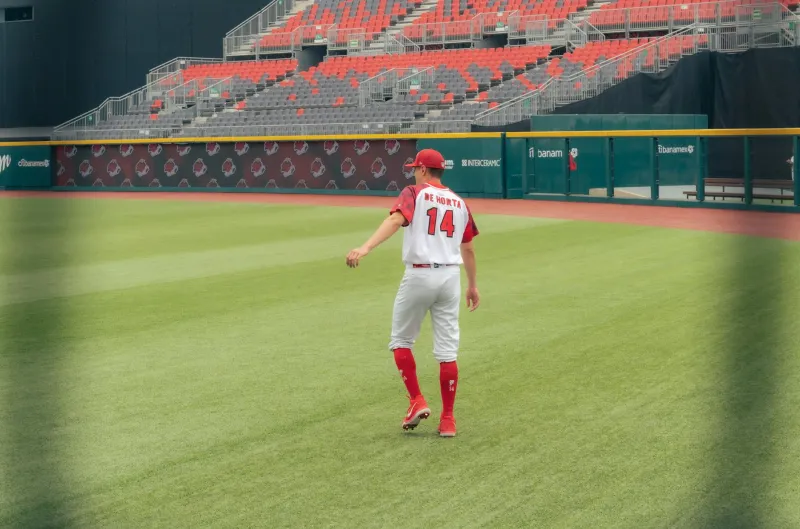
The Same Field, A Different Game
Walk past any Little League field in America today and you'll see something that looks remarkably familiar. The bases are still 60 feet apart. The pitcher's mound sits 46 feet from home plate. The outfield fence hasn't moved an inch since your dad played here in 1978.
But park in the lot and watch for ten minutes, and you'll witness a transformation so complete it would leave that 1978 version of your father scratching his head in confusion.
Back then, Little League was the neighborhood activity. Kids showed up with hand-me-down gloves and whatever cleats their parents could find at Woolworth's. The coach was usually somebody's dad who volunteered after work, armed with nothing more than enthusiasm and maybe a dog-eared copy of "Baseball Fundamentals." The season cost about as much as a family dinner out.
Today, that same field hosts a $3,000-per-year commitment that many working families simply can't afford.
When Baseball Belonged to Everyone
In the 1970s and 1980s, youth baseball operated on a beautifully simple model. Local leagues drew boundaries around neighborhoods. Every kid within those lines could play, regardless of skill level or family income. Registration fees rarely topped $50, and that covered everything: uniforms, equipment, field maintenance, and the post-game snacks.
Coaches were volunteers from the community — insurance salesmen, mechanics, teachers — who stepped up because someone had to. They taught fundamentals during two-hour practices and kept things moving with a mix of encouragement and common sense. Most had never played beyond high school, but they understood that nine-year-olds needed to learn how to catch a fly ball before they worried about advanced strategy.
The season followed a predictable rhythm. Practice twice a week, games on Saturday mornings, and maybe a tournament at the end if you were lucky. Parents brought folding chairs and coolers. Kids rode their bikes to the field. Everyone went home by noon.
This wasn't a pathway to college scholarships or professional careers. It was childhood, organized around America's pastime.
The Travel Team Revolution
Somewhere in the 1990s, everything shifted. The rise of travel baseball — club teams that competed across state lines — created a parallel universe where the most talented kids could play year-round against elite competition.
At first, travel teams served as an add-on for the truly dedicated. But as college recruiting became more competitive and athletic scholarships more valuable, what started as an option became an expectation. Parents began to view youth sports not as recreation, but as an investment in their child's future.
The economics changed overnight. Travel teams charged thousands in fees, plus equipment costs, hotel stays, and tournament entry fees. Specialized coaching replaced volunteer dads. Private lessons became standard. Training facilities with batting cages and pitching machines sprouted in strip malls across suburban America.
Local Little League enrollment started dropping as the best players migrated to club teams. What remained was often a watered-down version of the original experience, struggling to compete with organizations that promised better coaching, more games, and exposure to college scouts.
The Price of Excellence
Today's youth baseball operates on a two-tier system that would have been unthinkable a generation ago. At the top, elite travel teams charge $5,000 to $10,000 annually. These programs feature professional-level coaching, strength and conditioning programs, and travel schedules that rival minor league teams.
Meanwhile, traditional Little League still exists, but it's often viewed as the budget option — a place for kids who can't afford or don't want the intensity of club ball.
The transformation shows up in surprising ways. Modern youth players arrive at fields with equipment bags worth more than entire teams spent in 1980. They've been taught mechanics by former college players and analyzed through video technology. Some have personal trainers before they hit middle school.
Yet despite all this investment and expertise, something fundamental has been lost.
What Money Can't Buy
The old Little League model had flaws. Coaching was inconsistent. Some kids sat on the bench too much. The level of play wasn't always competitive.
But it accomplished something that today's system struggles to replicate: it was truly democratic. Every kid in the neighborhood could play, regardless of family income or athletic ability. The volunteer coaches, however imperfect, were invested in the community rather than building their own coaching careers.
Most importantly, it belonged to childhood rather than to parents' ambitions.
Today's travel baseball produces better players, no question. The instruction is superior, the competition is fierce, and the most talented kids develop skills that would have been impossible under the old system.
But it's also created a sport where participation depends on family wealth rather than interest. Kids from working-class families — the demographic that once formed baseball's backbone — increasingly find themselves priced out of their own national pastime.
The Field Remembers
Stand on any Little League field in America and look around. The dimensions haven't changed since 1939. The rules are nearly identical. Even the uniforms look remarkably similar to what kids wore decades ago.
But the sport itself has been completely rebuilt around a different set of values. Where once sat a community activity that brought neighborhoods together, there's now an industry that sorts children by their parents' ability to pay.
The field remembers what Little League used to be. The question is whether we do.