They Played for the Gate Money First — Before the Brand Deal Came Before the Game
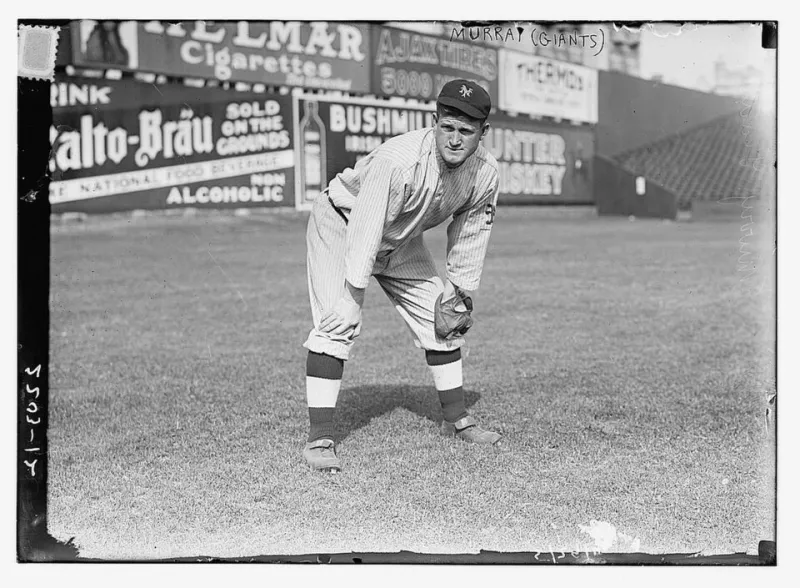
Photo: The Library of Congress, No restrictions, via Wikimedia Commons
The Gate and the Hero
In the early decades of American professional sports, the economics were refreshingly simple. People paid to get in. The players got a cut. The better you played, the more fans came, and the more money everyone made. There was a directness to it — a clear, honest transaction between athlete and audience that tied performance to reward in a way anyone could understand.
Babe Ruth famously earned more than President Herbert Hoover in 1930. When asked about it, he reportedly shrugged and said he'd had a better year. That was the logic of the era. You earned what the crowd decided you were worth, and the crowd voted with their wallets at the turnstile.
Local heroes in minor league towns were genuinely local. A pitcher who packed a small-city ballpark on a Friday night was a community asset — someone whose income came directly from the neighbors who cheered for him. The relationship between fan and athlete was transactional in the most literal sense. You showed up. He performed. Everyone went home satisfied.
The Amateur Ideal — And Its Contradictions
For much of the 20th century, college sports operated under a different but related principle: the amateur ideal. The notion that athletes competed for the love of the game, for school pride, for the pure experience of competition. It was a noble concept with a deeply uncomfortable reality underneath it.
College football and basketball programs were generating millions of dollars in revenue — building stadiums, funding entire athletic departments, and making coaches into millionaires — while the players who made it all possible were compensated with a scholarship and a meal plan. The NCAA enforced amateurism rules with a zealousness that, in hindsight, looks less like idealism and more like a business model protecting itself.
Professional sports, meanwhile, were evolving toward a new model. Television money began reshaping the economics of every major league in the 1960s and 1970s. Suddenly, the gate receipts — those honest, direct payments from fans at the door — were becoming almost secondary. The real money was coming from broadcast rights, and it was coming regardless of how many seats were filled on any given night.
Enter the Brand
The endorsement deal is older than most people realize. Babe Ruth pitched cigars. Joe DiMaggio sold coffee makers. But for most of the 20th century, endorsements were a supplement to athletic income, not the foundation of it. You played well, you became famous, and then the companies came calling. The sequence mattered.
That sequence has now been thoroughly scrambled.
The NIL era — Name, Image, and Likeness rights granted to college athletes in 2021 — made official what had been building for years. A quarterback who hasn't started a college game can sign with a local car dealership, a national protein powder brand, and a social media platform before his first snap. A women's basketball player can build a following of 500,000 people and monetize it before she's proven anything on the court.
None of that is inherently wrong. The old system was deeply unfair, and the athletes generating billions for their schools deserved compensation. But the shift has produced something genuinely new: an athletic economy where the brand can precede the accomplishment, and where visibility and marketability sometimes matter as much as performance.
What the Numbers Don't Capture
Here's a number worth sitting with: in 1950, the average MLB player earned about $13,000 a year — roughly equivalent to $160,000 today. Comfortable, but not extraordinary. The highest-paid players made multiples of that, but they were still tethered to the financial reality of their sport's audience.
Today, the average MLB salary is over $4 million. The top earners are in the $40–50 million range annually, and that's before endorsements. The economic distance between then and now is almost impossible to comprehend.
What changed wasn't just television money and collective bargaining, though both mattered enormously. What changed was the entire architecture of value in professional sports. Athletes stopped being performers paid by an audience and became IP — intellectual property, brand assets, content generators whose value extends far beyond any individual performance.
A player who goes 0-for-4 on a Tuesday night in September is still worth his contract. His jersey still sells. His social media posts still generate engagement. The game result is one data point among thousands in a much larger commercial ecosystem.
The Fan at the Turnstile
There's something worth mourning in all of this — not the low salaries of earlier eras, which reflected exploitation as much as simplicity — but the directness of the old relationship. When a local baseball hero earned his money from the people in the seats, there was an accountability built into the system. The fans were the employers, in a real and tangible sense.
Today, a fan buying a ticket is one tiny revenue stream among many. The franchise's broadcast deal, its stadium naming rights contract, its merchandise licensing agreements, and its players' individual endorsement portfolios all dwarf what comes through the gate. The fan is still valued — but differently. More as a content backdrop than as the financial foundation.
A Different Kind of Game
None of this means modern sports are worse. The games themselves are extraordinary. The athletes are generational talents operating at levels previous eras couldn't imagine. The reach of American sports culture is global in a way that would have stunned a 1940s baseball fan.
But sports used to be a business built on the simple premise that people would pay to watch something worth watching. The athlete's livelihood depended on delivering that experience, night after night, to the people in the stands.
Now the business is built on something far more complex, and far more abstract. The athlete is a brand. The game is content. And the fan at the turnstile is part of the product.
That's not a complaint. It's just a very different world than the one where Babe Ruth shrugged and said he'd had a better year.