Two Hours, No Clock, and Nobody Complained: What Baseball Lost When It Learned to Stall
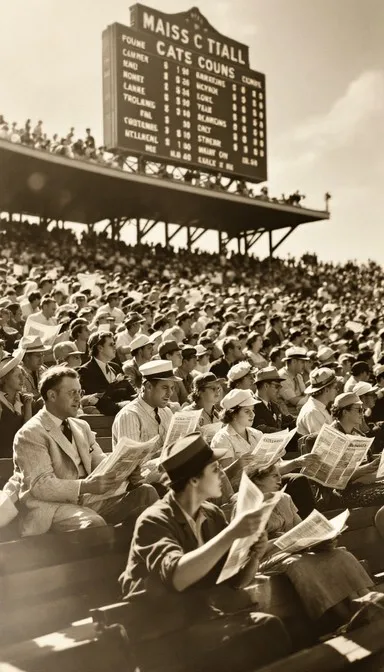
Photo: vintage baseball game 1950s stadium crowd, via images.stockcake.com
Grab a scorecard from 1955 and check the timestamps. A typical major league game that season ran about two hours and eighteen minutes. Fans settled in after lunch, watched roughly ninety minutes of actual baseball, and were home before dinner got cold. Nobody noticed the pace because there wasn't a problem to notice.
Fast forward to 2021, when the average game crept past three hours and ten minutes — nearly a full hour longer than the games their grandfathers watched. Baseball didn't get more exciting in that hour. It got slower, longer, and harder to finish.
The Two-Hour Afternoon
Games in the 1950s moved for reasons that sound almost quaint today. Pitchers worked fast because that's how everyone did it. There were no mound visits to convene a committee, no replay reviews, no batters stepping out to adjust their gloves between every pitch. The umpire said play ball, and play ball they did.
Television played a role too, but an odd one: it barely mattered. Most games weren't on TV at all. Radio broadcasts didn't need commercial breaks built into the action — the announcer simply read a sponsor's name between innings. The game belonged to the players and the clock, and the clock was winning.
How the Hours Piled Up
The slowdown wasn't one big decision. It was a thousand small ones, each defensible on its own.
Relief pitching changed everything. In the 1950s, a starter finishing what he began was normal, not heroic. Today's game deploys a starting pitcher for five innings, then hands the ball to a specialist, then another, then a closer. Every pitching change stops the game cold for warm-up throws, managerial walks to the mound, and strategic huddles. A modern bullpen game can feature six or seven pitchers where one man used to suffice.
Analytics poured gasoline on the fire. Front offices discovered that every extra pitch, every mound conference, every hitter working a deep count had measurable value. Nobody in the front office was ever rewarded for a brisk game.
And then television arrived in earnest. Once national broadcast contracts became the sport's financial engine, commercial breaks between innings stretched from a minute or so to two and a half minutes. Multiply that by seventeen or eighteen half-innings and you've added nearly an hour of standing around, paid for by advertisers who were, in effect, buying the time fans used to get for free.
The Scramble to Turn Back the Clock
By the early 2020s, league leadership faced an uncomfortable truth: the product had become a time commitment that a growing share of the audience simply wouldn't make. The response was the pitch clock — a rule that sounds almost absurd in its desperation. Grown men, playing a professional sport, needed a countdown timer to throw a ball.
It worked, startlingly well. The 2023 season saw game times drop by roughly twenty-four minutes, back down to levels not seen since the mid-1980s. Bases were enlarged, restrictions were placed on infield shifts, and pickoff attempts were limited. The sport essentially admitted that it had spent forty years engineering the fun out of its own product.
What Was Actually Lost
Here's the part worth sitting with. The extra hour wasn't stolen by accident — it was sold. Every commercial break, every pitching change, every analytical edge represented value captured by someone: a network, a team, a front office. The fans paid in time, one of the few currencies they never agreed to spend.
A fan in 1955 got more action per minute than a fan in 2021, for a cheaper ticket, in a shorter afternoon. That's not nostalgia talking; that's arithmetic. The pitch clock didn't restore anything new. It rolled back a tax that nobody voted for.
Baseball's pace, it turns out, was never sacred. It was negotiable all along — it just took the sport seventy years to admit it had negotiated against its own customers.