The Universal Gym Class That Built American Grit — Before Fitness Became a Family's Financial Statement
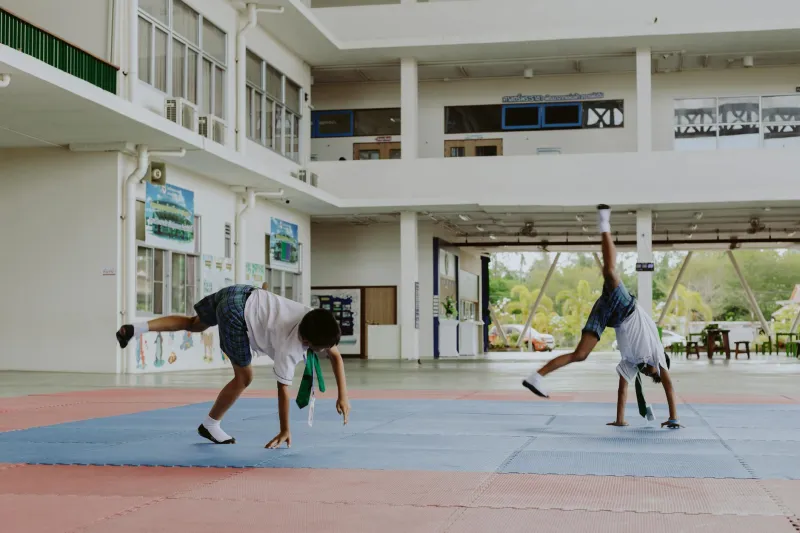
The Universal Gym Class That Built American Grit — Before Fitness Became a Family's Financial Statement
In 1985, every American high schooler knew the drill. Second period meant changing into those regulation gym shorts, lining up for attendance, and facing whatever Coach Thompson had planned for the day. It didn't matter if your dad was a CEO or your mom worked double shifts at the diner — everyone ran the same track, climbed the same rope, and sweated through the same Presidential Fitness Test.
That shared experience is vanishing faster than most people realize, replaced by a fitness culture that sorts kids by their family's financial capacity long before they're old enough to understand what that means.
When PE Was Actually Required
Back in the day, physical education wasn't optional. Most states mandated daily PE classes from elementary through high school graduation. The curriculum was standardized and universal — rope climbing, relay races, dodgeball, and those dreaded fitness tests that measured everything from sit-ups to the mile run.
Every kid participated. The star quarterback sweated next to the future valedictorian. The class clown struggled through pull-ups alongside the quiet kid who spent lunch in the library. There was no opting out, no alternatives, and certainly no private coaching to give anyone an edge.
The Presidential Physical Fitness Test became a shared national experience. Millions of American kids knew exactly what it felt like to hang from that pull-up bar, counting seconds until their grip gave out. They understood the burning in their lungs during the mile run and the satisfaction of improving their sit-up count from fall to spring.
The Quiet Dismantling
Then something shifted. Budget cuts started chipping away at PE programs in the 1990s. Schools facing financial pressure found it easier to reduce physical education requirements than core academic subjects. What began as temporary cost-saving measures became permanent policy changes.
Today, only Oregon and the District of Columbia require PE in every grade from K-12. Most states have weakened their requirements significantly. Some allow students to substitute other activities — marching band, JROTC, or even online health courses — for actual physical education.
The result? A generation of kids who might go through their entire educational experience without breaking a real sweat at school.
The Rise of Pay-to-Play Fitness
As public PE programs withered, private youth athletics exploded. Club sports, personal trainers, and specialized fitness programs filled the gap — but only for families who could afford the price tag.
Consider the numbers: A year of club soccer can cost $3,000-$5,000. Elite gymnastics programs run $8,000-$15,000 annually. Even basic youth sports leagues that were once community-funded now charge hundreds of dollars in registration fees, equipment costs, and travel expenses.
Meanwhile, boutique fitness culture has trickled down to teenagers. High-end gyms offer teen memberships, specialized training programs, and performance coaching that would have been unthinkable for the average family a generation ago.
The New Athletic Divide
This shift created something America had never really seen before: a fitness class system that starts in childhood.
On one side, you have kids whose families invest heavily in their athletic development. They attend specialized camps, work with private coaches, and join competitive travel teams. These children often develop sophisticated understanding of nutrition, training principles, and sports psychology before they graduate high school.
On the other side are kids whose only exposure to organized physical activity comes from whatever PE program remains at their school — if any exists at all. Many graduate without ever learning proper exercise form, understanding basic nutrition principles, or developing the habits that build lifelong fitness.
The Science Behind the Change
Research shows the consequences are measurable and significant. Childhood obesity rates have tripled since the 1970s. Youth fitness levels have declined across multiple metrics. But perhaps more telling, the gap between fit and unfit kids has widened dramatically.
Studies tracking youth fitness find that kids from higher-income families now significantly outperform their peers in basic physical assessments — a gap that didn't exist when PE was universal and standardized.
The Presidential Youth Fitness Program still exists, but it's now optional for schools. The shared national benchmark that once connected kids across economic and geographic lines has become just another program that some schools implement and others ignore.
Beyond the Gym Floor
The implications extend far beyond physical fitness. Those old PE classes taught lessons that had nothing to do with athletics — how to handle failure, push through discomfort, and support teammates who struggled. They created bonds between kids who might never interact otherwise.
Today's fitness landscape, dominated by specialized programs and private coaching, often lacks that democratic mixing. Kids increasingly exercise only with others from similar backgrounds, missing the social lessons that came from sweating together regardless of family circumstances.
The Path We've Chosen
America didn't consciously decide to make youth fitness a luxury good. The change happened gradually, through budget decisions, policy shifts, and cultural changes that seemed reasonable in isolation.
But the cumulative effect is clear: We've replaced a system that gave every kid a basic fitness foundation with one that provides excellent opportunities for some children and very little for others.
The high school gym class that once served as America's great athletic equalizer has become another line on the family budget — optional for those who can afford alternatives, and increasingly absent for those who can't.