When Road Trips Were Adventures, Not Commutes — How America's Greatest Journey Became a Living Room on Wheels
When Road Trips Were Adventures, Not Commutes — How America's Greatest Journey Became a Living Room on Wheels
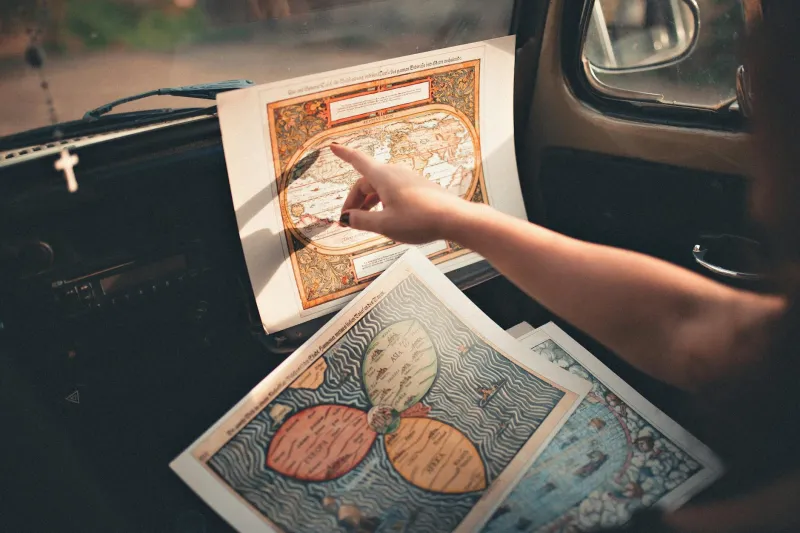
Picture this: It's 1979, and your dad is hunched over the steering wheel of a wood-paneled station wagon, squinting at a massive paper map that's been folded and refolded so many times it's practically falling apart. Your mom is frantically searching through the glove compartment for a pen to mark your route, while you and your siblings are crammed in the back seat, playing the license plate game and asking "Are we there yet?" for the fifteenth time in an hour.
Fast-forward to today, and that same family road trip looks nothing like the adventure your parents remember. The modern family vehicle has transformed into a rolling entertainment center, complete with built-in navigation systems, individual screens for each passenger, and Wi-Fi strong enough to stream Netflix in 4K resolution.
The Paper Map Era: When Getting Lost Was Part of the Fun
In the pre-GPS days, planning a road trip was an event in itself. Families would spread out massive AAA TripTiks on the kitchen table, carefully plotting their route with highlighters and sticky notes. These accordion-folded maps became the family's lifeline, passed between the driver and navigator like a sacred text.
Getting lost wasn't just possible — it was practically inevitable. And somehow, those wrong turns often led to the trip's best discoveries. Maybe you'd stumble across a roadside diner with the world's best apple pie, or find yourself driving through a small town during their annual summer festival. These unplanned detours became the stories families would tell for decades.
The car itself was a much simpler affair. Entertainment options included AM/FM radio (if you were lucky enough to pick up a signal), a cassette player for the adventurous, and whatever games you could invent using nothing but your imagination and the passing landscape. The "quiet game" wasn't just a parenting trick — it was often the only way to hear the radio over the engine noise.
The Digital Revolution Hits the Highway
Sometime in the early 2000s, everything changed. GPS units appeared on dashboards, initially as expensive add-ons that only the most tech-savvy families could afford. These early devices were clunky and often unreliable, but they represented the beginning of the end for the paper map era.
Today's family vehicles are technological marvels that would have seemed like science fiction to those 1970s road trippers. Built-in navigation systems don't just tell you where to go — they monitor traffic patterns in real-time, suggest alternate routes to avoid construction, and even predict when you'll need to stop for gas based on your current fuel level and driving habits.
Entertainment Evolution: From License Plates to Live Streaming
The transformation of in-car entertainment has been perhaps the most dramatic change of all. Where families once relied on car games, singalongs, and the occasional roadside attraction to break up long stretches of highway, today's passengers can access virtually any form of entertainment imaginable.
Modern minivans and SUVs come equipped with individual screens for each passenger, allowing kids to watch different movies, play video games, or video chat with friends back home. Some vehicles even feature built-in gaming consoles and the ability to connect multiple wireless headphones simultaneously.
Wi-Fi hotspots have turned the family car into a mobile office and entertainment center. Parents can take work calls from the passenger seat while kids stream the latest episodes of their favorite shows. The car has become so connected that many families never truly "disconnect" from their digital lives, even when they're hundreds of miles from home.
The Lost Art of Paying Attention
But something important was lost in this technological transformation. The old-fashioned road trip forced families to interact with each other and their surroundings in ways that simply don't happen anymore. When entertainment was scarce, families created their own fun through conversation, games, and shared observation of the passing landscape.
Children who grew up in the paper map era can still recite the license plates of all 50 states, remember the jingles from roadside attraction billboards, and navigate by landmarks rather than GPS coordinates. They learned geography not from textbooks but from watching America scroll past their windows, mile by mile.
The spontaneous discoveries that made road trips memorable have largely disappeared as well. GPS navigation optimizes for efficiency, routing families along the fastest, most direct paths. The scenic detours, quirky roadside attractions, and unexpected stops that once defined the American road trip experience have been algorithmically eliminated in favor of arrival time optimization.
Comfort vs. Character
There's no denying that modern road trips are more comfortable and convenient than their predecessors. Climate control keeps everyone at the perfect temperature, while advanced suspension systems smooth out the bumps and jolts that once made long drives genuinely uncomfortable. Built-in coolers and multiple cup holders eliminate the need for messy ice chests and the inevitable spills that came with trying to pass drinks around a moving vehicle.
Safety improvements have been equally dramatic. Modern vehicles are equipped with collision avoidance systems, lane departure warnings, and automatic emergency braking that make highway travel exponentially safer than it was in previous decades. GPS navigation eliminates the dangerous practice of trying to read paper maps while driving, and real-time traffic updates help families avoid the construction zones and accidents that once turned pleasant drives into hours-long ordeals.
The Question of Progress
So has all this technology made the American road trip better? The answer depends on what you value most. If your goal is to arrive at your destination as quickly and comfortably as possible, with minimal conflict and maximum entertainment, then modern road trips are clearly superior.
But if you believe that the journey should be as important as the destination — that road trips should create shared memories, foster family bonding, and provide opportunities for discovery and adventure — then something essential has been lost.
The paper map and prayer approach to family travel may have been less efficient, but it was undeniably more adventurous. When every mile was uncertain and every turn could lead to something unexpected, the road trip truly was a journey into the unknown.
Today's families arrive at their destinations well-rested, entertained, and exactly on schedule. But they may never know what amazing detour they missed along the way.