The Card in the Mailbox That Actually Meant You Were Remembered
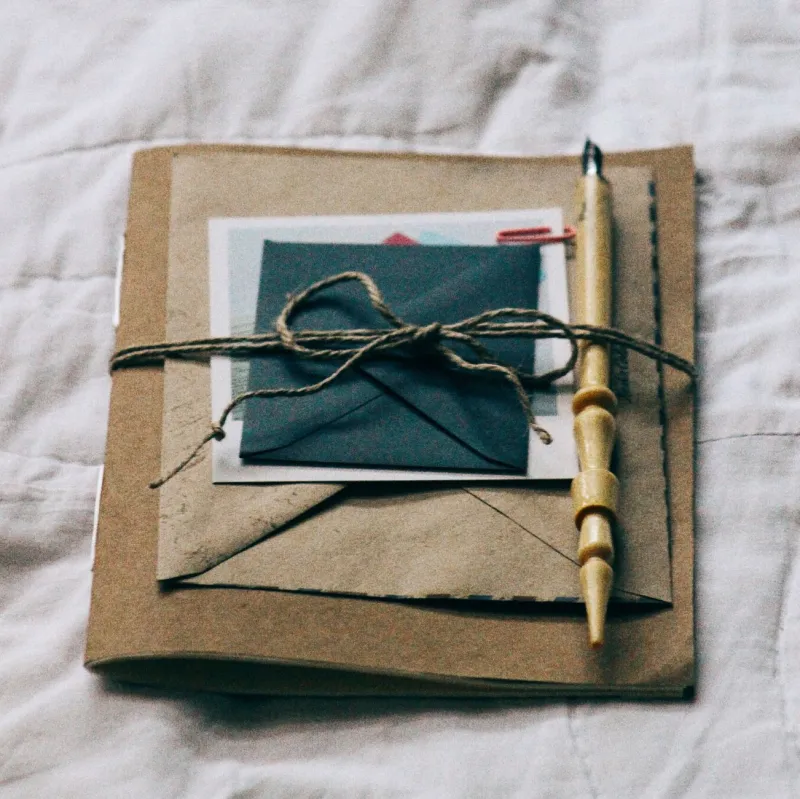
If you grew up before the internet, you probably remember the particular feeling of finding a birthday card in the mailbox. Not the package — just the card. A standard envelope, your name written in someone's actual handwriting, a stamp slightly crooked in the corner. You knew before you opened it that somebody had thought about you specifically, gone somewhere to find this thing, and done something with their hands to make sure it reached you.
That feeling is genuinely hard to explain to someone who's only ever received a Facebook notification.
What It Actually Took
Sending a birthday card in the 1960s, 70s, or 80s was a small but deliberate act. It required remembering the date without a digital reminder. It required a trip — to the drugstore, the five-and-dime, the stationery shop — and a few minutes of real browsing. Hallmark and American Greetings built enormous businesses on the premise that people wanted to say something but needed help finding the words, and that the physical object was part of the message.
You'd flip through a rack, reading cards until one felt right. Not just generically acceptable — right. Funny enough, or sincere enough, or specific enough to the person you were sending it to. Then you'd write something inside. Even if it was just "Thinking of you — Happy Birthday, Love Aunt Carol," that line was in Carol's handwriting, which meant something.
The stamp. The mailbox. The three-day wait.
And on the receiving end, people kept them. Shoeboxes full of birthday cards. Cards tucked into the frames of mirrors. Cards saved in dresser drawers for decades. There was a physical record of who had shown up for you over the years, written in a dozen different hands.
When the Friction Disappeared
Email birthday greetings started softening the ritual in the 1990s. Then Facebook launched its birthday reminder feature — and arguably changed the social dynamics of how Americans acknowledge each other more than any single product in recent memory.
Suddenly, every person you'd ever met online knew it was your birthday, and a wall of "Happy Birthday!!!" posts appeared automatically, triggered not by memory or affection but by an algorithm. Sending a birthday message required exactly three clicks and zero seconds of thought. And because everyone was doing it, not doing it became conspicuous — so people did it, even when they had no particular feeling behind it.
The gesture became free. And when something costs nothing — no time, no money, no effort, no risk of getting the timing wrong — it communicates exactly that.
This isn't a generational complaint. It's basic economics. The value of a signal depends partly on its cost. A card that required a trip to the store, a decision, a handwritten line, and a stamp had a cost. That cost was the point.
The Numbers Behind the Shift
At its peak in the mid-1990s, Americans were purchasing roughly 7 billion greeting cards per year, according to the Greeting Card Association. That number has declined steadily. By the early 2020s, it had dropped to somewhere between 5 and 6 billion annually, a slide that looks modest until you factor in population growth. Per capita, the drop is steeper.
Meanwhile, the average American receives hundreds of digital birthday acknowledgments per year across platforms — and studies suggest most people can't recall more than a handful of them afterward. The messages arrive, trigger a brief dopamine response, and disappear into the scroll.
The cards in the shoebox, though? People still have those.
What the Ritual Was Really Doing
Here's the thing that gets lost in the nostalgia: the birthday card wasn't really about the card. It was about the proof of effort. It was a small, recurring signal that said: I have your birthday in my head. I took time out of a regular day to do something just for you. You are worth the stamp.
That signal had social weight. Receiving a card from a distant relative you rarely saw was evidence that you existed in their mental world on an ordinary Tuesday in March. That's not nothing. That's actually quite a lot.
The digital equivalent — a notification-triggered wall post — communicates something different. It says: the platform reminded me, and I clicked. Which is fine. It's not hostile. But it's not the same thing, and pretending it is requires a kind of collective polite fiction that most people sense even if they don't say it.
Something Worth Keeping
A small but noticeable counter-movement has been building for a few years now. Stationery shops are reopening in cities that wrote them off a decade ago. Etsy shops selling custom cards are thriving. Younger adults — the same generation raised on instant everything — are buying stamps and sending physical mail to people they care about, precisely because it's unusual. Precisely because it costs something.
Which suggests that the instinct was never really gone. People still understand that a gesture with friction in it carries more weight than one without. They just need a reason to remember it.
Your birthday is coming up. Somewhere in your past, there's probably a shoebox. Open it and see whose handwriting is in there. Those are the people who actually showed up — one stamp at a time.