Before the Send Button: When a Letter Took Two Weeks and Every Sentence Had to Earn Its Place
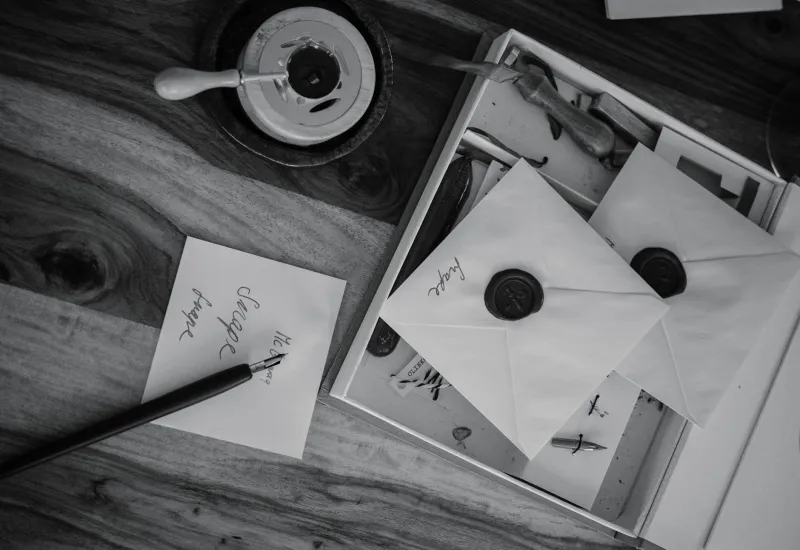
The Weight of a Single Envelope
Somewhere in a shoebox in a closet in almost every older American home, there are letters. Real ones — handwritten on thin paper, folded into envelopes with stamps in the corner, postmarked from places and times that feel impossibly distant. Love letters from a grandfather stationed overseas. A mother's careful advice written to a college-bound daughter. A neighbor's condolence note, its ink slightly smeared, written the afternoon after a funeral.
These weren't special people. They were ordinary Americans who understood, without thinking much about it, that a letter was a permanent thing. That it would travel slowly, arrive in someone's hands, and possibly sit in a drawer for the next fifty years. That understanding shaped every word.
Now think about the last text message you sent. Can you remember it? Can you remember the one before that?
When Communication Demanded Commitment
For most of American history, writing a letter was the primary way people stayed connected across distance. Before the telephone became universal in American households — which didn't happen until the late 1940s and early 1950s — a letter was often the only option. And because it was the only option, people got very good at it.
The process had a natural discipline built in. You couldn't dash off a thought and hit send. You had to sit down, gather yourself, find the right paper and pen, and commit to the act of writing. The physical slowness of the process created mental space. You thought about what you actually wanted to say. You considered how it would land. You revised sentences in your head before committing ink to paper because crossing things out looked careless.
Historical letters from ordinary Americans — not just famous ones — reveal a level of emotional precision and narrative craft that we tend to associate only with professional writers. Civil War soldiers writing home from the front. Immigrants writing to family left behind in Europe. Teenagers writing to summer camp friends in the days before school started again. The letters are specific, considered, and alive in a way that feels almost startling when you read them today.
Famous Letters, and What They Tell Us
The historical record is full of letters that became literature almost by accident. Abraham Lincoln's letter to Mrs. Bixby, the mother of five sons lost in the Civil War, runs fewer than 150 words — and it remains one of the most emotionally powerful things any American president ever wrote. Not because Lincoln was performing for history, but because he was writing a letter, and letters demanded that kind of care.
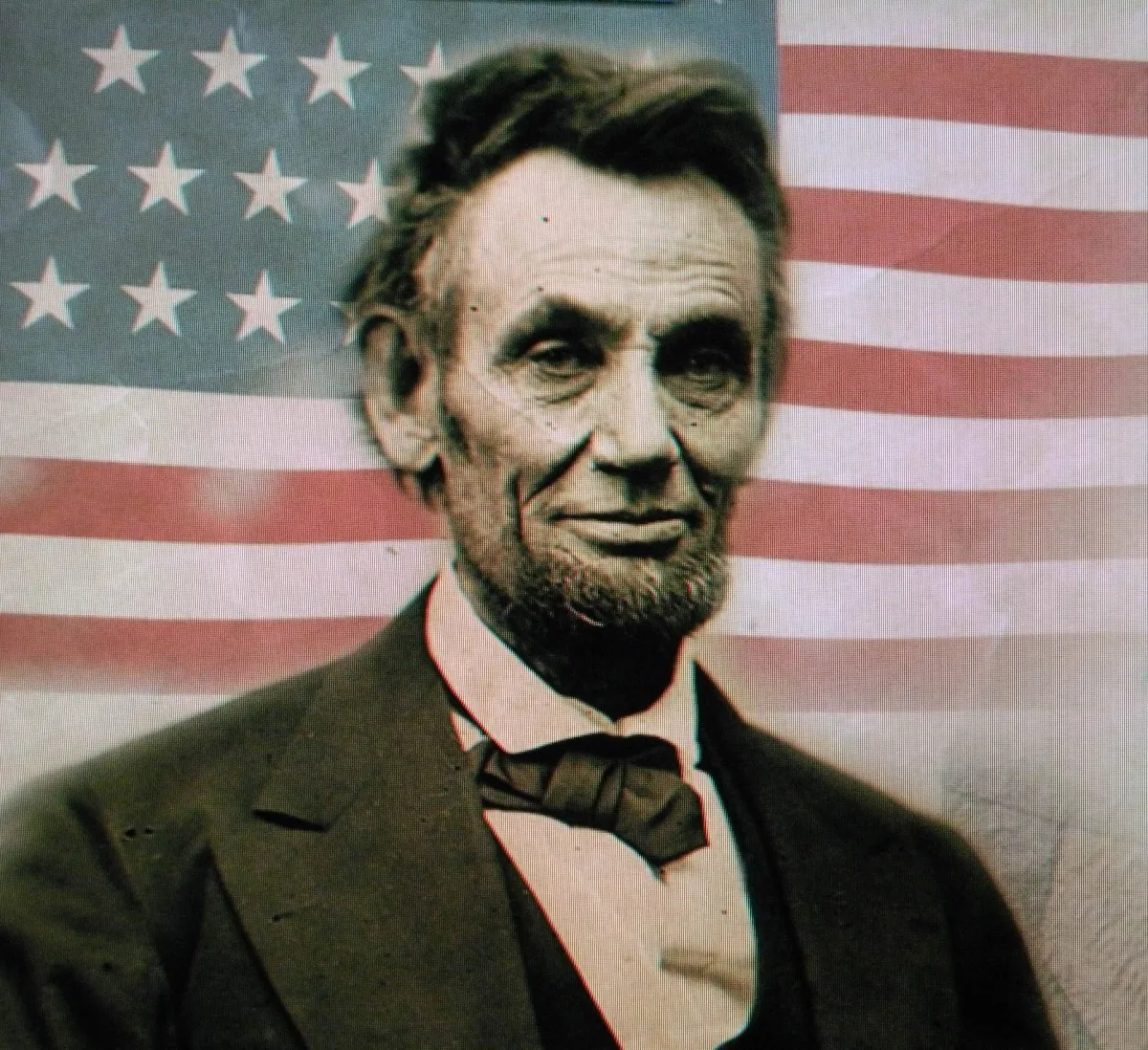 Photo: Abraham Lincoln, via wallpapers.com
E.B. White, the essayist who gave us Charlotte's Web, maintained a decades-long correspondence with readers, editors, and friends that fills a substantial collected volume. The letters are funny, melancholy, precise, and deeply human. They're also a record of a life in a way that no email archive — even if it survived, which most don't — could ever replicate.
 Photo: E.B. White, via pngimg.com
Ordinary Americans wrote with similar seriousness. The letters of WWII servicemen, collected in archives across the country, show young men with limited formal education writing home with a clarity and emotional honesty that would embarrass most adults today. They had to. The letter might be the last thing they sent. Every word mattered because every word might be all they had.
Speed Changed Everything — Including What We Bother to Say
The telephone began eating into letter-writing culture through the mid-twentieth century. The fax machine arrived in offices. Email went mainstream in the 1990s, and suddenly distance communication was instant, free, and frictionless. By the time smartphones put text messaging in everyone's pocket, the written letter had become a near-extinct form — something people sent at Christmas, or occasionally for very formal occasions, or as a self-conscious romantic gesture.
What replaced it was volume. The average American now sends and receives somewhere around 40 text messages per day. Email inboxes receive dozens more. Social media adds another layer of ambient communication that never quite stops. We are, by any historical measure, the most continuously connected humans who have ever lived.
And yet there's a growing sense — documented in surveys, explored in therapy offices, discussed in essays and podcasts across the country — that people feel less deeply known by others than previous generations did. That communication has become abundant and intimacy has become scarce. That we talk constantly and say very little.
The medium is at least part of the explanation. When a message costs nothing to send, requires no preparation, and disappears from memory almost immediately, there's no pressure to make it count. The discipline that letter-writing imposed — the forced reflection, the considered word choice, the awareness that what you wrote would outlast the moment — was also its gift.
What Slowing Down Produced
There's a reason historians can reconstruct the inner lives of people who died two centuries ago with extraordinary intimacy, and will likely struggle to do the same for people alive today. Letters survived. They were kept. They were re-read. They accumulated into a record of a relationship, a life, a time.
The letters between John and Abigail Adams, written during long separations while John served in the Continental Congress, are among the most remarkable documents in American history — not because the Adamses were unusually eloquent, but because they were writing letters. The form required depth, and depth produced something worth keeping.
 Photo: John and Abigail Adams, via wallpapers.com
Text threads expire. Email gets deleted in bulk. The digital record of most American lives today is simultaneously enormous and almost entirely disposable.
The Thing Worth Recovering
Nobody is arguing that slow mail was better than instant communication in every practical sense. Emergency information that once took days to transmit now travels in seconds. Families separated by distance can video-call in real time. The gains are real and enormous.
But the loss is real too. The habit of sitting down, gathering your thoughts, and writing to someone with care and intention — knowing they would receive your words in a quiet moment, read them slowly, and perhaps keep them — produced a quality of human connection that speed has not managed to replicate.
The letters in that shoebox didn't survive by accident. Someone kept them because they mattered. Because they said something true about a person, a moment, a relationship. Because the writer had slowed down long enough to mean every word.
We have more ways to reach each other now than at any point in history. We just have fewer reasons to make it count.