The Sunday Game Was Free — Now Following One Team Costs More Than a Car Payment
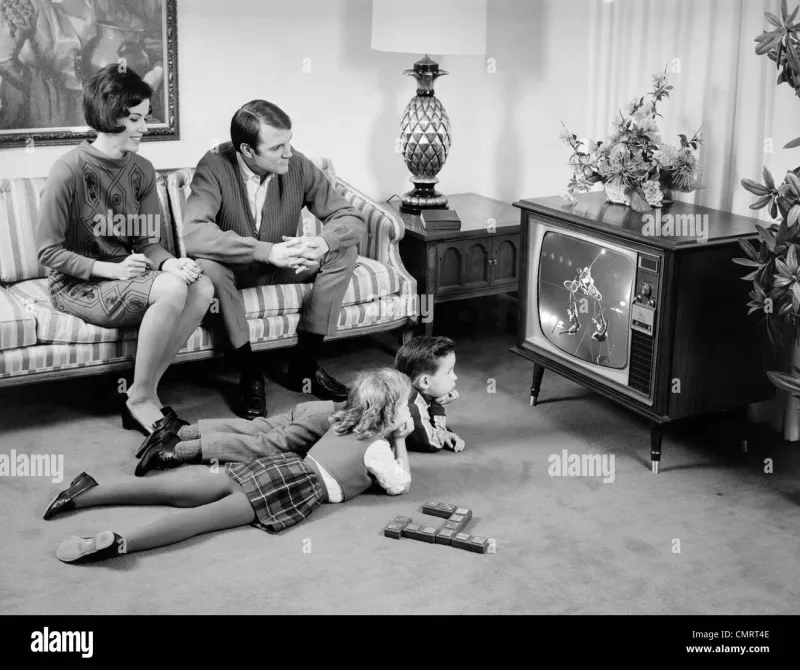
Photo: family watching television 1960s living room retro, via c8.alamy.com
Picture a Sunday afternoon in 1962. Dad's stretched out in the recliner, the kids are on the shag carpet, and the game is on — the one game, on one channel, that everyone in the neighborhood is watching. The cost of admission? Whatever the family already paid for a television and an antenna. Nothing per game. Nothing per season. No login, no app, no subscription tier.
That arrangement sounds like a fairy tale now, and the numbers behind it tell you exactly how far we've traveled.
One Channel, Whole Country
For decades, sports on television followed a simple model: a handful of over-the-air networks carried marquee games, and regional broadcasts filled out the schedule. The Game of the Week meant literally that — a single nationally broadcast game, and if you wanted baseball, that's what was on. Saturday afternoons belonged to college football. Sunday was professional football's day. The scarcity was the point. Everyone watched the same thing because there was nothing else to watch.
The bill for all of this, for the fan at home, was effectively zero. Broadcasters paid teams for the rights and made it back through advertising. The viewer's only obligation was to sit through a cigarette commercial.
The Great Unbundling
Cable changed the economics, and then streaming shattered them entirely. Regional sports networks arrived in the 1980s and 1990s, moving local games behind a pay-TV wall. Then came the league-owned networks, the out-of-market packages, and finally the streaming era, where rights were carved up and sold to the highest bidder — often a different bidder for every day of the week.
Today, following a single MLB or NBA team through a full season might require a cable or streaming bundle for regional games, a national streaming service for certain weeknights, an exclusive platform for others, and a separate app for playoff games. Add it up and a devoted fan of one team can easily spend $1,000 or more a year just for the privilege of watching that team — and that's before blackout rules occasionally make the game unwatchable in the team's own market.
The Absurdity, Quantified
Here's a comparison worth dwelling on. In 1965, the average color television cost around $500 — several weeks of the median wage. Once bought, it delivered every broadcast game available, forever, for free.
Today, a decent TV costs a fraction of that in real terms. But the screen is the cheapest part of the experience. The content — the thing that actually matters — is rented in perpetuity, sliced across services, and subject to change every time a rights deal expires. Fans used to own the window; now they rent the view.
And here's the kicker: the total number of games available has never been higher, and the share of them any one person can conveniently watch has arguably never been lower. Access exploded. Simplicity collapsed.
Did We Actually Gain Anything?
To be fair, there are genuine wins. Out-of-market fans can follow their hometown team from across the country, something impossible in 1962. Every game is available somewhere, in high definition, on demand. Highlights arrive on your phone before the postgame show ends.
But convenience and access aren't the same thing. The 1962 viewer had one game and zero friction. The 2025 viewer has every game and a spreadsheet. The industry calls this choice; a reasonable person might call it a toll booth. The Sunday game didn't disappear because fans stopped wanting it. It disappeared because everyone in the supply chain figured out that the same product could be sold again and again, one subscription at a time.
The free afternoon never got more expensive. We just stopped being the customers — and started being the inventory.