He Remembered Your Father's Heart Condition — Now You're a Stranger With a Clipboard
Somewhere around 1965, if you walked into Dr. Harold Simmons' office in suburban Ohio, he already knew why you were there. Not because he'd reviewed your chart that morning. Because he'd delivered you, treated your mother's rheumatoid arthritis for a decade, and recognized your father's nervous cough the moment he heard it from the waiting room. That was just how medicine worked.
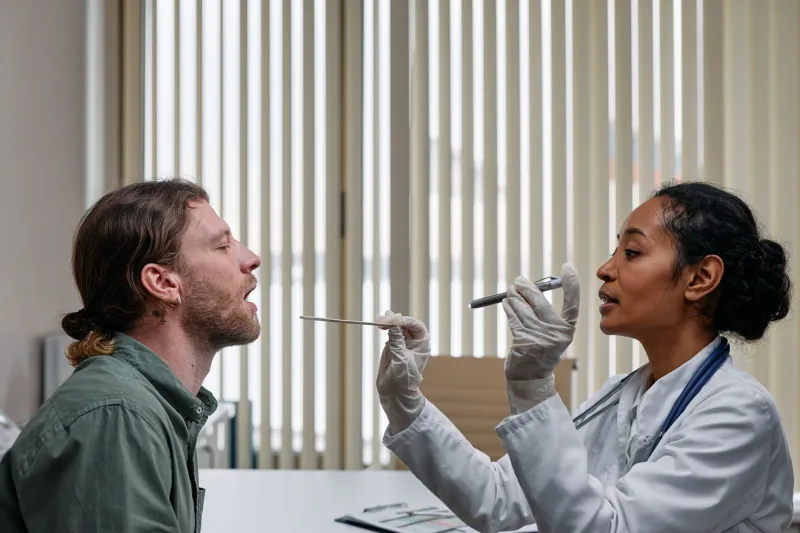
Fast forward to today. You've got a sprained ankle, a new insurance plan, and a 9:40 appointment with someone you've never met. You fill out seven pages of forms. You repeat your allergy list. You explain, again, that your grandfather had early-onset diabetes. The doctor nods, types something, and you're out in eleven minutes.
Something fundamental shifted between those two moments — and most of us have just quietly accepted it as the price of progress.
The Era of the Family Physician
For most of the 20th century, the concept of a "family doctor" wasn't a marketing phrase. It was a literal description of how medicine was delivered. A general practitioner would follow a patient from childhood through old age, sometimes across two or three generations of the same household. They weren't just tracking symptoms. They were tracking people.
That kind of longitudinal knowledge is hard to overstate. A doctor who had treated your mother's anxiety and your grandfather's hypertension wasn't just managing individual conditions — they were reading a biological narrative. They knew which symptoms were worth watching and which ones ran in your family like wallpaper. They made connections that no intake form can replicate.
In 1960, roughly 80% of physician visits in the United States were with general practitioners. By 2010, that number had dropped below 35%. Specialization exploded. Insurance networks fragmented. And the average length of a primary care visit shrank to somewhere between 13 and 17 minutes, depending on which study you read.
What Electronic Records Were Supposed to Fix
The push toward electronic health records — which became near-universal after the HITECH Act of 2009 offered hospitals financial incentives to digitize — was supposed to solve the continuity problem. If your whole history lived in a database, it wouldn't matter who was reading it. The data would travel with you.
In theory, that's elegant. In practice, interoperability between different hospital systems remains a persistent nightmare. A 2022 report from the Office of the National Coordinator for Health Information Technology found that only about half of hospitals could consistently access clinical records from outside providers. Which means patients are still repeating themselves — just to someone who's also staring at a screen instead of looking at them.
There's also something the data doesn't capture. The physician who knew you didn't just know your lab values. They knew you were a worrier. They knew you downplayed pain. They knew your wife had recently passed and that your sleep had been off since October. That context shapes a diagnosis in ways that no dropdown menu can accommodate.
The Numbers Behind the Shift
The consequences of fragmented care aren't abstract. Research published in the Annals of Family Medicine found that patients with a consistent long-term primary care relationship had significantly lower rates of preventable hospitalizations and emergency room visits. A landmark UK study tracking over 200,000 patients found that the longer the continuity of care with a single physician, the lower the mortality rate — full stop.
In the U.S., the average patient now sees between 18 and 19 different physicians over the course of their lifetime. That number was far lower in the 1970s, when geographic stability and simpler insurance structures made long-term relationships the default rather than the exception.
Meanwhile, physician burnout — much of it driven by the administrative burden of navigating digital systems, prior authorizations, and productivity quotas — has reached record levels. A 2023 American Medical Association survey found that more than half of physicians reported at least one symptom of burnout. When doctors are exhausted and racing the clock, the subtle art of knowing a patient becomes an unaffordable luxury.
What We've Gained — and What We've Traded Away
It would be too easy to just romanticize the old model. The family doctor of the 1950s was also operating with dramatically less diagnostic capability. They couldn't order a same-day MRI. They didn't have access to the pharmacological toolkit that exists today. Medicine has genuinely gotten better at treating specific conditions, and specialization deserves real credit for that.
But there's a difference between treating a condition and caring for a person. The fragmented system we've built is, in many ways, extraordinarily good at the former and structurally indifferent to the latter.
Trust is part of this equation too. Gallup's long-running confidence surveys show that public trust in the medical establishment has declined steadily since the 1980s. Whether that's driven by the impersonal nature of modern visits, high-profile pharmaceutical controversies, or the simple fact that patients no longer feel known by their providers is hard to separate. But the correlation is hard to ignore.
Can We Get Any of It Back?
Some health systems are experimenting with direct primary care models — a subscription-based approach where patients pay a monthly fee directly to a physician, bypassing the insurance machinery. These practices deliberately limit patient loads to allow longer visits and genuine longitudinal relationships. Early outcomes data is encouraging.
Concierge medicine exists too, though it's priced in a way that makes it effectively unavailable to anyone who isn't already comfortable. That's not a solution. It's just a different tier.
The honest answer is that medicine isn't going backward. The technology, the specialization, the networked systems — they're not disappearing. But there's growing recognition, even within healthcare policy circles, that something real was lost when the doctor who knew your family by name became a stranger with a twelve-minute slot and a portal login.
Dr. Simmons didn't have an algorithm. He had a memory, a waiting room, and thirty years of context. Sometimes that was the whole diagnosis.