When Kids Figured It Out Themselves — The Lost Art of Playground Justice
The Recess Court That Never Needed Judges
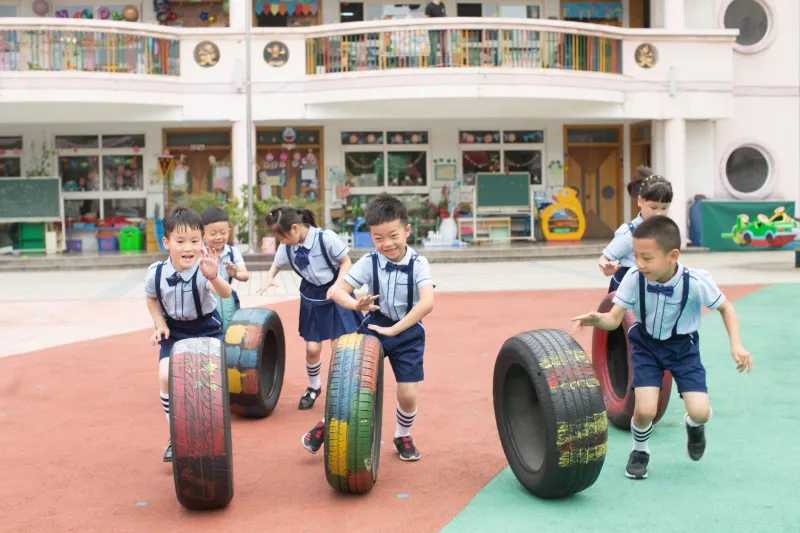
Every weekday at 10:15 AM, Lincoln Elementary's playground transformed into a complex ecosystem of self-governance that would make political scientists weep with envy. Twenty-seven third-graders would pour out of the building, form teams for kickball, establish rules for four-square, and navigate the social dynamics of who got to use the good swings — all without a single adult referee.
 Photo: Lincoln Elementary, via classic-literature.co.uk
When disputes arose, they got settled on the spot. "Heads or tails" determined first pick. "Do-over" fixed questionable calls. "Rock, paper, scissors" broke deadlocks. By the time the bell rang at 10:45, every conflict had been resolved, every game completed, and every participant ready to move on with their day.
That was 1985. Today, that same playground operates under fundamentally different principles.
The Democracy of Dirt and Dodgeball
The unsupervised playground functioned as America's most effective civics classroom. Children learned negotiation skills by arguing over whether a ball was fair or foul. They discovered compromise by dividing teams when numbers didn't work out evenly. They practiced leadership by organizing games and following rules they'd collectively agreed upon.
Most importantly, they learned that conflicts were normal, solvable, and temporary. The kid who got tagged out arguing in the third inning would be picking teams again tomorrow, harboring no grudges and expecting none in return. Disputes were situational, not personal. Problems were immediate, not documented.
The playground's informal justice system operated on principles that adult courts spend years trying to achieve: swift resolution, peer accountability, and genuine acceptance of outcomes. When Tommy claimed he wasn't tagged, the other kids would debate the call, reach a decision, and Tommy would accept it because he knew he'd get the same fair hearing next time.
When Adult Intervention Became the Default
Sometime in the 1990s, American childhood underwent a quiet revolution. The philosophy shifted from "let kids work it out" to "prevent problems before they start." Playground supervisors went from passive observers to active mediators. Recess became structured. Free play became supervised activity.
This transformation happened gradually and with good intentions. Schools faced increased liability concerns. Parents demanded safer environments. Child development experts emphasized the importance of adult guidance. Each change made sense individually, but collectively they eliminated something crucial: the opportunity for children to practice independence.
Today's elementary playground features dedicated conflict resolution specialists, anti-bullying protocols, and incident report systems that document every disagreement. What used to be settled with "best two out of three" now requires adult investigation, parent notification, and often formal mediation sessions.
The Professionalization of Childhood Conflict
The modern approach to childhood disputes resembles nothing so much as corporate human resources management. When two kids disagree about game rules, trained adults facilitate discussion sessions. When someone gets their feelings hurt, counselors provide therapeutic intervention. When playground politics turn complicated, administrators develop behavior modification plans.
These systems work, in their way. They reduce physical altercations, minimize hurt feelings, and create documentation trails that satisfy institutional requirements. But they've also eliminated the messy, inefficient, absolutely essential process of learning to handle conflict independently.
Today's children are taught to "tell a grown-up" when problems arise. They learn to wait for adult mediation rather than attempt their own solutions. They're trained to see conflicts as serious events requiring professional intervention rather than normal social friction that can be resolved with basic fairness and goodwill.
The Coin Flip Generation vs. the Documentation Generation
The contrast between generations is striking. Adults who grew up with playground self-governance tend to approach conflicts with a "let's figure this out" mentality. They're comfortable with imperfect solutions, quick decisions, and moving on without holding grudges.
Meanwhile, young adults who grew up in the age of structured childhood often struggle with unmediated conflict. They're more likely to escalate disagreements to authority figures, document problems rather than solve them, and view conflicts as evidence of systemic issues rather than normal human friction.
This isn't a criticism of either generation — it's an observation about how childhood experiences shape adult behavior. The playground skills that previous generations took for granted were actually sophisticated social competencies that required practice to develop.
The Science of Social Learning
Child development research supports what playground veterans always knew: unsupervised social interaction teaches skills that can't be learned in structured environments. When children negotiate their own rules, they develop executive function skills. When they resolve their own conflicts, they build emotional regulation abilities. When they face natural consequences for antisocial behavior, they learn empathy more effectively than through any curriculum.
The key factor is agency. Children who solve their own problems develop confidence in their problem-solving abilities. They learn that conflicts are survivable, that fair solutions exist, and that relationships can withstand disagreements. These lessons require authentic practice, not simulated scenarios.
Structured conflict resolution programs teach valuable skills, but they can't replicate the urgency and authenticity of real playground disputes. When adults control the process, children learn to depend on adult intervention rather than developing their own capabilities.
The Athletics Connection
This transformation is particularly visible in youth sports, where the informal pickup game has largely disappeared. Previous generations learned sports through neighborhood games with self-officiated rules and natural consequences for poor behavior. Today's young athletes learn through organized leagues with adult referees, formal protests, and appeal processes.
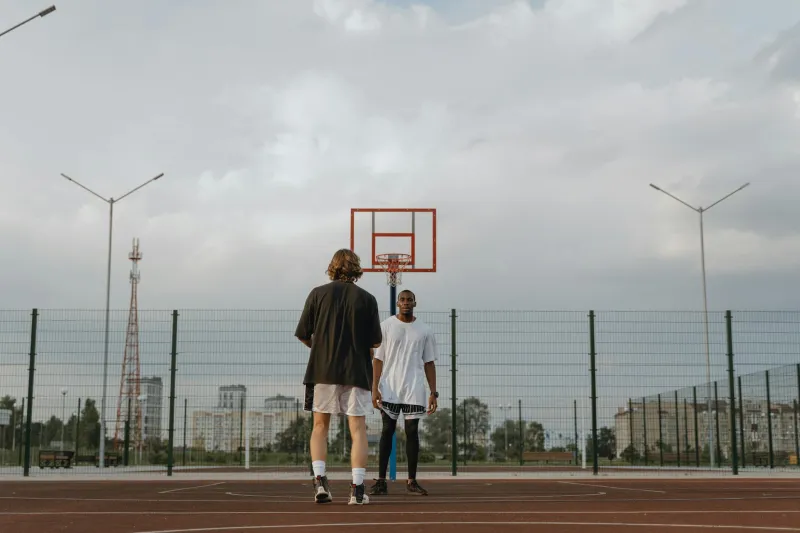
The pickup basketball game at the local court taught players to call their own fouls, accept questionable calls, and keep playing despite disagreements. These skills translated directly to character development and social competence. The organized league game teaches players to rely on official judgment and formal dispute resolution processes.
Both systems have merit, but they develop different capabilities. The self-officiated game builds internal moral compasses; the referee-officiated game builds respect for external authority. Previous generations got both experiences; current generations primarily get the latter.
The Litigation Mindset
Perhaps the most significant shift is from resolution-focused to documentation-focused conflict management. The coin flip generation learned to solve problems and move on. Today's children often learn to document problems and seek redress through formal channels.
This reflects broader cultural changes in how Americans handle disputes. The informal, relationship-preserving approach has given way to formal, rights-based systems. These changes serve important functions in adult society, but they may be premature for childhood development.
Children who learn to document conflicts before attempting resolution may struggle with the informal give-and-take that characterizes healthy adult relationships. They might escalate minor disagreements that previous generations would have handled with a quick conversation and a handshake.
What We've Gained and Lost
The modern approach to childhood conflict has genuine benefits. It reduces bullying, protects vulnerable children, and teaches explicit social skills that some children might not learn naturally. The documentation systems help identify patterns of problematic behavior that informal systems might miss.
But the costs are real too. Children have fewer opportunities to practice independence, develop resilience, and learn that most conflicts are temporary and solvable. They're less likely to develop the quick decision-making skills and social confidence that come from successfully navigating unstructured peer interactions.
The Independence Paradox
The irony is that in trying to protect children from conflict, we've made them less capable of handling the conflicts they'll inevitably face as adults. The workplace, marriage, and civic life all require the ability to negotiate disagreements without formal mediation. These skills develop through practice, and practice requires authentic situations with real stakes.
The playground provided a perfect laboratory for this learning: low-stakes conflicts with immediate feedback and natural consequences. When we eliminated that laboratory, we didn't eliminate conflict from children's lives — we just moved it to higher-stakes environments where the learning curve is steeper and the costs of failure are greater.
The Path Forward
The goal isn't to return to completely unsupervised childhood — the safety and inclusion improvements of modern approaches have real value. But there's wisdom in recognizing what was lost when we professionalized every aspect of childhood conflict resolution.
Perhaps the answer lies in creating structured opportunities for unstructured learning — times and spaces where children can practice independence while still having access to adult support when truly needed. The coin flip still works for settling disputes, but only if children are given the chance to use it.
The playground democracy of previous generations wasn't perfect, but it taught essential life skills through authentic practice. In our rush to protect children from conflict, we may have protected them from something even more valuable: the confidence that comes from knowing you can figure things out for yourself.