Twenty-Four Shots to Capture a Year — Now We Shoot Two Hundred Before Breakfast and Remember Almost Nothing
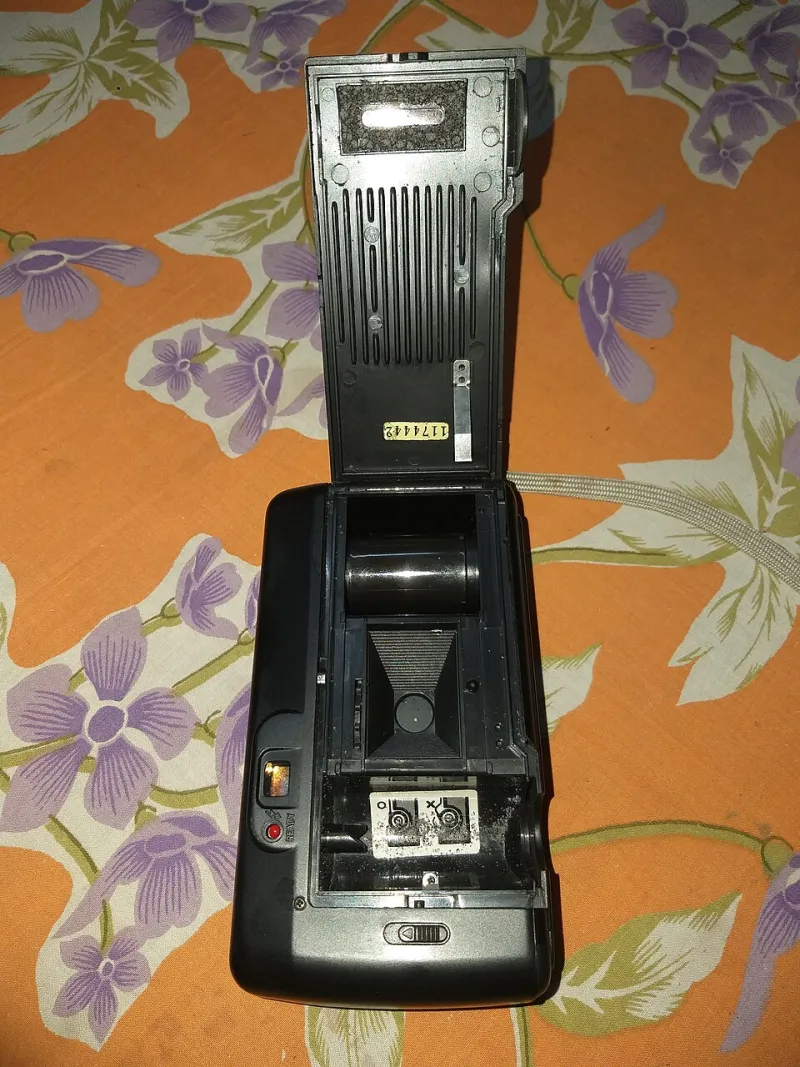
Photo: Billjones94, CC0, via Wikimedia Commons
The Weight of Twenty-Four Exposures
There was a particular kind of pressure that came with loading a new roll of film into a camera. Twenty-four shots. Maybe thirty-six if you splurged on the longer roll. That was your entire allocation for a vacation, a birthday party, a family Christmas — whatever the occasion, you had a hard ceiling and no way to see what you'd captured until weeks later.
You thought before you pressed the shutter. You repositioned. You waited for the right moment. And when you finally got your prints back from the drugstore — that little paper envelope with the negatives tucked inside — there was genuine anticipation involved. Sometimes disappointment. Sometimes a photo that surprised you with how right it had turned out.
That entire experience, from the careful framing to the waiting to the physical envelope of prints, is now so thoroughly obsolete that explaining it to someone under twenty requires a bit of effort.
What Film Photography Actually Cost
Let's put some numbers around this, because the economics shaped the behavior in ways that are easy to underestimate.
In the 1970s and '80s, a roll of 24-exposure Kodak film cost roughly $3 to $4. Developing and printing added another $6 to $10, depending on where you went. So every roll of photos — every 24 images — cost a family somewhere between $9 and $14 from start to finish. In today's dollars, that's $35 to $55 per 24 photographs.
Run that math on modern behavior. The average American smartphone user now takes somewhere between 2,000 and 5,000 photos per year, according to various industry estimates. Some surveys suggest the number is higher. Apply the old film cost to that volume and you're looking at a theoretical photography bill of $3,000 to $10,000 annually — per person.
Obviously that's a thought experiment, not a real comparison. But it illustrates something genuine: the cost of each individual photograph has dropped so close to zero that it has effectively ceased to function as a constraint on behavior at all.
The Scarcity That Made Things Matter
Behavioral economists have a concept sometimes called the scarcity premium — the idea that limited resources tend to be treated with more care and attention than abundant ones. Film photography was essentially a real-world demonstration of this principle running continuously for a century.
When you had 24 shots to document an entire summer road trip, each frame carried weight. You weren't going to waste one on a blurry shot of the dashboard or a slightly-off angle of the Grand Canyon. You waited. You composed. You made a decision.
 Photo: Grand Canyon, via grandcanyonwest.com
And when those prints came back — when you held the physical object in your hand, maybe slid it into an album — something happened in your brain that researchers are now starting to understand better.
A study published in the journal Psychological Science found evidence of what researchers called the "photo-taking impairment effect" — the counterintuitive finding that photographing an object can actually reduce how well you remember it. The act of outsourcing memory to a device appears to reduce the depth of cognitive processing in the moment. You saw it, you captured it, your brain filed it as handled.
Film photographers, constrained by their roll limits, had no choice but to actually experience the moments they weren't photographing. The camera was a selective tool, not a continuous recording device.
The Abundance Problem
Here's a number that tends to land hard: humanity now takes approximately 1.8 trillion photographs per year. That figure, cited regularly by imaging researchers, has roughly doubled in the last decade. The overwhelming majority of those images live on phones, in cloud storage, in digital folders that most people rarely open.
Ask yourself honestly: when did you last scroll back through photos from three years ago? When did you last print a photograph?
The photo album — that physical object that used to sit on the coffee table and get pulled out when relatives visited — has largely disappeared from American homes. In its place is a camera roll with thousands of images, organized by date, largely unreviewed, almost never printed. The Library of Congress preserves physical photographs from the 1800s. Archivists are genuinely worried about the long-term preservation of digital images stored in proprietary formats on platforms that may not exist in fifty years.
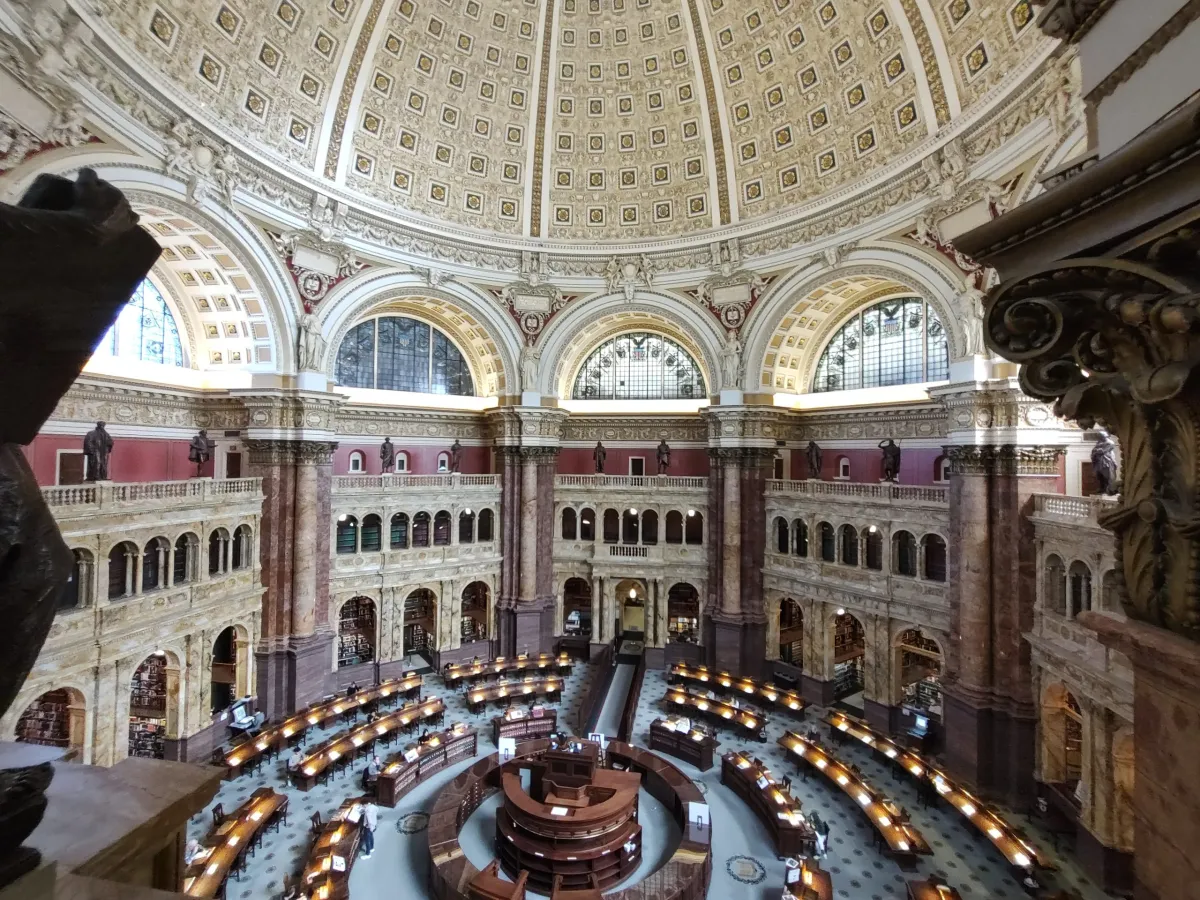 Photo: Library of Congress, via pennwatch.org
The Prints That Survived
There's a reason your parents and grandparents can identify people in photographs from sixty years ago with remarkable precision. Those photos were rare. They were selected, printed, handled, and revisited over decades. The images that made it into albums were survivors of a curation process — only the meaningful ones got developed, and only the best of those got mounted.
Contrast that with the experience most Americans have today: you take forty photos at Thanksgiving, post three of them to Instagram, and the other thirty-seven sit in your camera roll forever. You don't delete them because storage is essentially free. You don't print them because that feels unnecessary. You don't really look at them again because there are always new ones coming.
The result is a kind of photographic inflation — an abundance of images that has paradoxically made each one feel less valuable, less permanent, less worth the emotional investment of actually remembering.
Fewer Pictures, Stronger Memories
None of this is an argument for going back to film — the accessibility of modern cameras has democratized photography in genuinely wonderful ways. The ability to document everyday life, to capture spontaneous moments, to share experiences instantly across distance — these are real gains.
But the comparison between the film era and the smartphone era reveals something that doesn't get discussed much: constraint can be a feature, not just a limitation. The families who shot carefully through one roll of Kodak Gold at Christmas and then waited three weeks for their prints came away with something the algorithm can't replicate — a small collection of images they would remember for the rest of their lives.
We didn't just change how we take photographs. We changed what photographs mean. And we're still figuring out what we lost in the trade.