Eight Ball, Two Quarters, No Password: The Neighborhood Pool Hall America Quietly Walked Away From
Photo: Steve Shook from Moscow, Idaho, USA, CC BY 2.0, via Wikimedia Commons
The Door Was Always Open
There was nothing sophisticated about the average American pool hall in 1965. Drop ceilings, usually. Fluorescent lights that buzzed just loud enough to be annoying. A cigarette machine by the door. Maybe a soda fountain if the owner was feeling ambitious. The air smelled like chalk dust and coffee, and the crack of a break shot could be heard halfway down the block.
You didn't need a membership. You didn't need to know anyone. You walked in, put your quarters on the rail of a table to signal you had next, and waited. That was the entire process. A teenager on a Tuesday afternoon occupied the same space as a retired machinist and a guy in a tie killing time before a dinner reservation. The pool hall was one of the few places in American life where the social sorting that happened everywhere else — by income, by age, by job title — largely dissolved.
The game had a way of doing that.
A Genuinely Democratic Institution
At its peak in mid-20th century America, the neighborhood pool hall was almost invisibly woven into the fabric of daily life. Most towns of any size had at least one. Bigger cities had dozens, often clustered near factory districts or downtown commercial blocks where working people had an hour to burn between shifts or after work. The economics were straightforward: table time ran maybe 25 to 50 cents per game, a Coke cost a dime, and a serious player could stretch an afternoon on a couple of dollars.
What made it work wasn't the price — it was the structure. Or rather, the lack of it. Nobody was hosting trivia night. Nobody was doing themed cocktail hours. There was no DJ, no event calendar, no dress code. You showed up, you played, you talked. The conversation ranged from last night's game to neighborhood gossip to the kind of slow, philosophical rambling that only happens when people have nothing particular to accomplish.
Pool halls attracted a reputation — some deserved, some not — for being rough around the edges. Hollywood leaned into that image with films like The Hustler (1961), which portrayed the pool hall as a place of grifters and hard luck. But the reality in most American towns was considerably more ordinary. It was just a room where people gathered, and the gathering was the point.
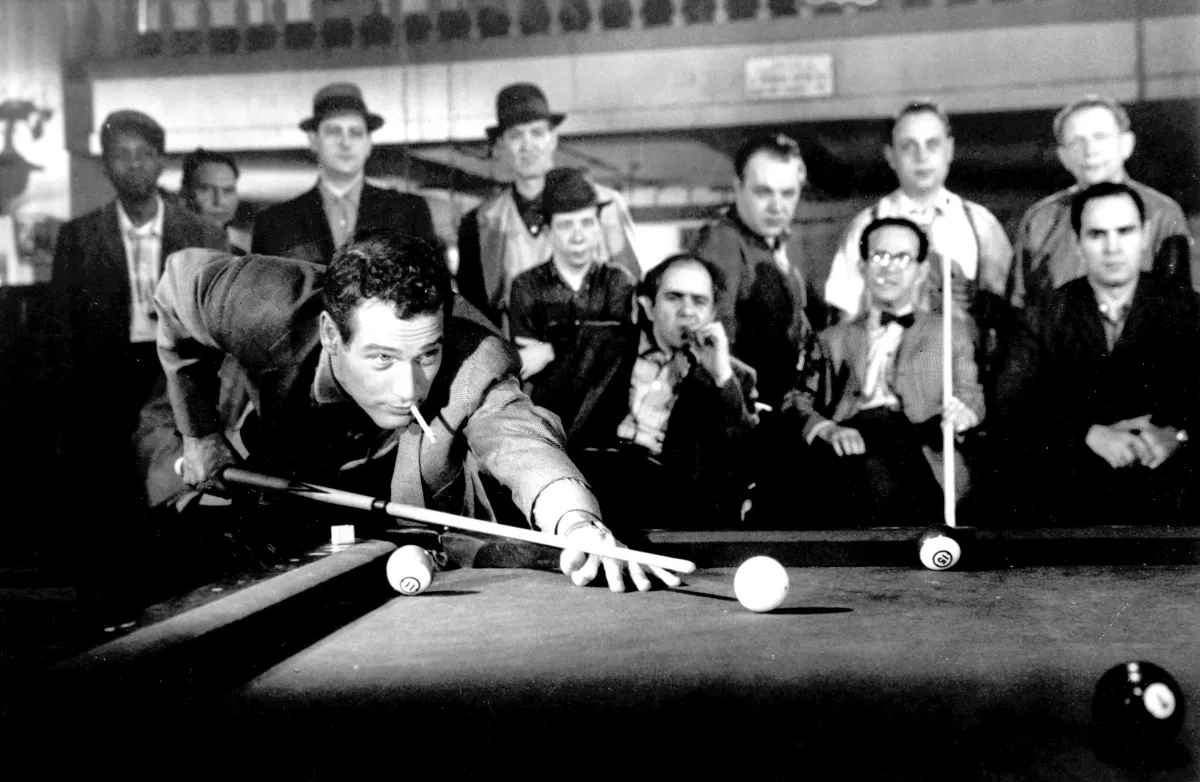 Photo: The Hustler, via prod-images.tcm.com
How the Decline Happened
The pool hall didn't disappear overnight. It faded, the way a lot of informal American institutions faded — gradually, then all at once.
The first wave of closures came in the late 1970s and 1980s as urban retail landscapes shifted. Rising rents pushed out low-margin businesses. The factory jobs that had anchored the working-class neighborhoods around many pool halls began to evaporate. The clientele aged out without a younger generation reliably replacing them.
Then came the second wave: the entertainment explosion of the 1990s. Video games. Multiplexes with stadium seating. Cable television with 50 channels. The pool hall suddenly looked slow by comparison — a black-and-white option in a color world. Some operators tried to modernize, adding arcade games and sports bars, turning themselves into entertainment complexes. A few survived that way. Most didn't.
By the 2000s, the corner pool hall was largely a memory in most American communities. What replaced it wasn't a single thing — it was a fragmented landscape of options, each of them more produced, more expensive, and more deliberately designed than the old neighborhood table room ever was.
What the Algorithm Can't Replicate
Consider what a modern equivalent looks like. Dave & Buster's offers pool tables alongside arcade games and a full bar, but the experience is engineered within an inch of its life — loud, branded, and priced for a two-drink minimum. Upscale billiards lounges in major cities charge $20 to $40 per hour for table time and require reservations on weekends. The social element is there, technically, but it's been packaged and monetized until it barely resembles the original.
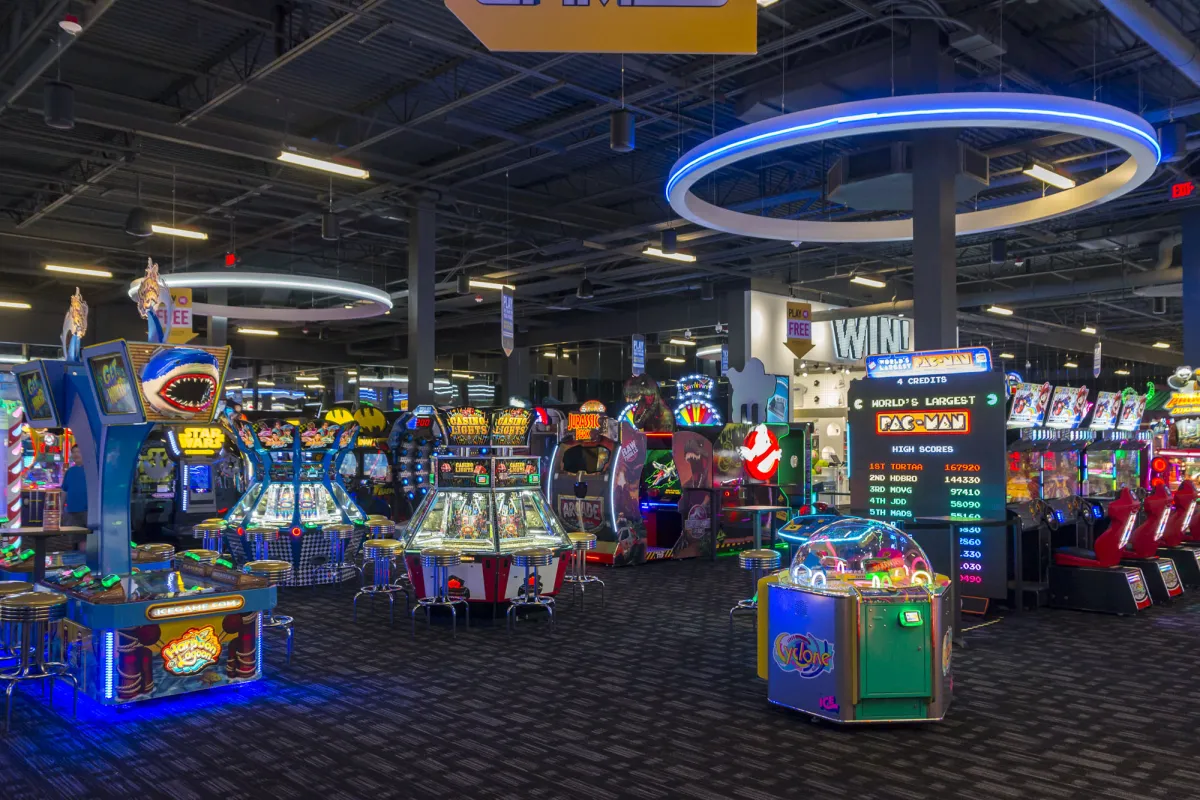 Photo: Dave & Buster's, via cdn.vox-cdn.com
Online entertainment has done the rest. Discord servers, multiplayer gaming, social media — these are the spaces where Americans under 40 now do a significant portion of their socializing. They're convenient and in many ways remarkable. But they share a quality that the old pool hall specifically lacked: they're curated. Algorithmic. Designed to keep you engaged, to show you content, to monetize your attention.
The pool hall didn't want anything from you except your quarters. It had no interest in your data, your preferences, or your engagement metrics. You were just a person in a room with other people, and that was enough.
The Empty Table in the Corner
There's a reason people over 50 talk about the old pool hall with a specific kind of warmth — not nostalgia for the cigarette smoke or the sticky floors, but for something harder to name. The ease of it. The way you could walk into a room full of strangers and leave knowing half of them by name, without a single organized icebreaker or networking event.
America has more entertainment options today than at any point in its history. We have never had more ways to fill an evening. And yet the thing the pool hall offered — unstructured, unhurried, genuinely accidental human connection — has become almost impossible to find at any price.
Two quarters used to buy you an afternoon of that. Now it won't even get you a parking meter.