When the Whole Town Stopped to Watch the Band Go By — The Slow Disappearance of School Music in America
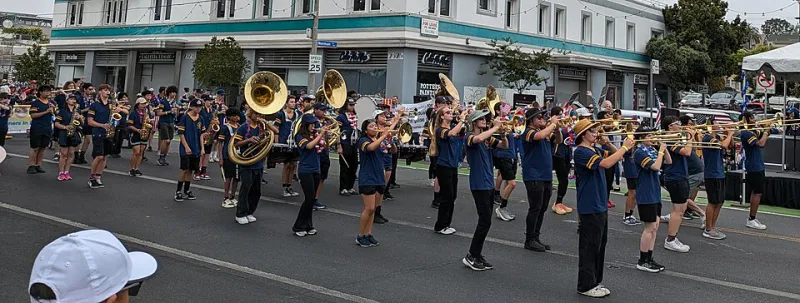
Photo: Mx. Granger, CC0, via Wikimedia Commons
Friday Night on Main Street
Picture a Friday evening in a mid-sized American town in 1962. The high school football game is about to kick off, but the real event — the one the parents have actually come downtown for — starts before the opening whistle. The marching band is moving down Main Street in full uniform: brass catching the streetlights, drums setting a cadence you can feel in your chest, a hundred kids in matching jackets playing with the particular kind of focused pride that only comes from months of after-school practice.
 Photo: Main Street, via thumbs.dreamstime.com
This wasn't a special occasion. This was just autumn in America.
For most of the 20th century, school music programs were one of the most visible and well-funded corners of American public education. Marching bands, jazz ensembles, concert orchestras, and choir groups weren't considered luxuries or enrichment extras — they were core to what school was supposed to do. You learned math, you learned reading, and you learned to play an instrument. That was the deal.
The Scale of What Was Built
The numbers from mid-century America are genuinely striking. By the early 1960s, an estimated 30 million Americans were enrolled in some form of school music program. That represented a substantial portion of the student population. Instruments were often owned by the school district and loaned to students at no cost. Uniforms were purchased with school funds. Band directors were full-time, tenured staff members with their own classrooms, their own budgets, and in many communities, their own celebrity status.
The marching band wasn't just a school activity — it was a community institution. Bands performed at Memorial Day parades, Fourth of July celebrations, civic dedications, and homecoming games. They represented their towns at state competitions. In smaller communities especially, the high school band was often the only live musical performance that most residents would see in a given year. The director was a figure of genuine civic importance.
 Photo: Memorial Day, via day-off.app
This infrastructure took decades to build and was maintained with the understanding that music education wasn't a frill — it was preparation for life. Research that would later confirm what teachers intuitively knew — that music training improves math performance, language development, and social coordination — was still being conducted. But the commitment to music in schools didn't need the science. It was just considered part of what a good education looked like.
Where the Cracks Started
The first serious cracks appeared in the 1970s. The combination of economic stagnation, rising inflation, and a national tax revolt — punctuated by California's Proposition 13 in 1978, which dramatically capped property tax revenue and forced deep cuts to school budgets across the state — began squeezing the programs that administrators considered non-essential.
Music, art, and physical education were almost always the first to feel the blade. The logic was straightforward, if shortsighted: these subjects didn't appear on standardized tests, so their impact was harder to quantify. When a district had to choose between keeping a reading specialist and keeping a band director, the reading specialist usually won.
The 1980s accelerated the trend. The federal push toward standardized testing — which would culminate in No Child Left Behind in 2001 — created enormous pressure on schools to concentrate resources on math and reading scores. Music programs that survived did so increasingly through booster clubs, parent fundraising, and the kind of community advocacy that required constant effort to sustain.
By the 1990s, pay-to-play had arrived. Families in districts across the country began receiving bills for instrument rental, uniform fees, and participation costs that would have been unimaginable a generation earlier. A program that had once been free and universal was becoming a subscription service.
The Program That Disappeared Quietly
Today, the landscape is fractured in ways that tend to track closely with zip code and income. Well-funded suburban districts often still maintain impressive music programs — full orchestras, marching bands with professional-grade equipment, travel budgets for competitions. These schools look, in some ways, like the mid-century ideal.
But in underfunded urban and rural districts, the picture is dramatically different. A 2019 analysis found that roughly 1.3 million American students had no access to music education at all. Many more were in schools where music was offered once a week, taught by a generalist rather than a specialist, with no instruments available to take home. The marching band, if it existed at all, might have 20 kids in it instead of 100.
The cultural ripple effects are harder to measure but no less real. The school band was one of the few extracurricular activities that required genuine long-term commitment and rewarded it publicly. You practiced for months and then you performed in front of your entire community. That feedback loop — effort, skill, public recognition — built something in kids that went well beyond the ability to play a B-flat scale.
The Silence Left Behind
The marching band that once moved down Main Street on a Friday night did more than entertain. It announced something about the town — that this community invested in its children, that it valued performance and discipline and the particular beauty of a hundred people doing something difficult together.
When that band stops marching, the silence isn't just musical. It's the sound of a community deciding, often without quite realizing it, that some things aren't worth paying for anymore.
The kids who would have played trumpet in the back row, or carried the bass drum, or learned to read a score — they're still there. They just don't have a place to go on Friday night. And the town that used to line the sidewalk to cheer them has no idea what it's missing.